A research poster is a visual presentation of your research in the form of a poster, used to communicate and promote your work at academic conferences or scientific events. It's a powerful tool to engage with your peers, share your findings succinctly, and spark interesting discussions. But what exactly goes into creating an effective research poster?
Before we delve into the intricacies of crafting a research poster, let's clarify its purpose. A research poster doesn't aim to replace a full research paper. Instead, it's designed to be a snapshot of your work, a trailer, if you will, that entices viewers to ask questions and learn more about your research.
Understanding the Format
A typical research poster follows a structured format to ensure clear and efficient communication of your research. The standard dimensions of a poster are around 4 feet high and 6 feet wide, providing ample space to include all essential elements.
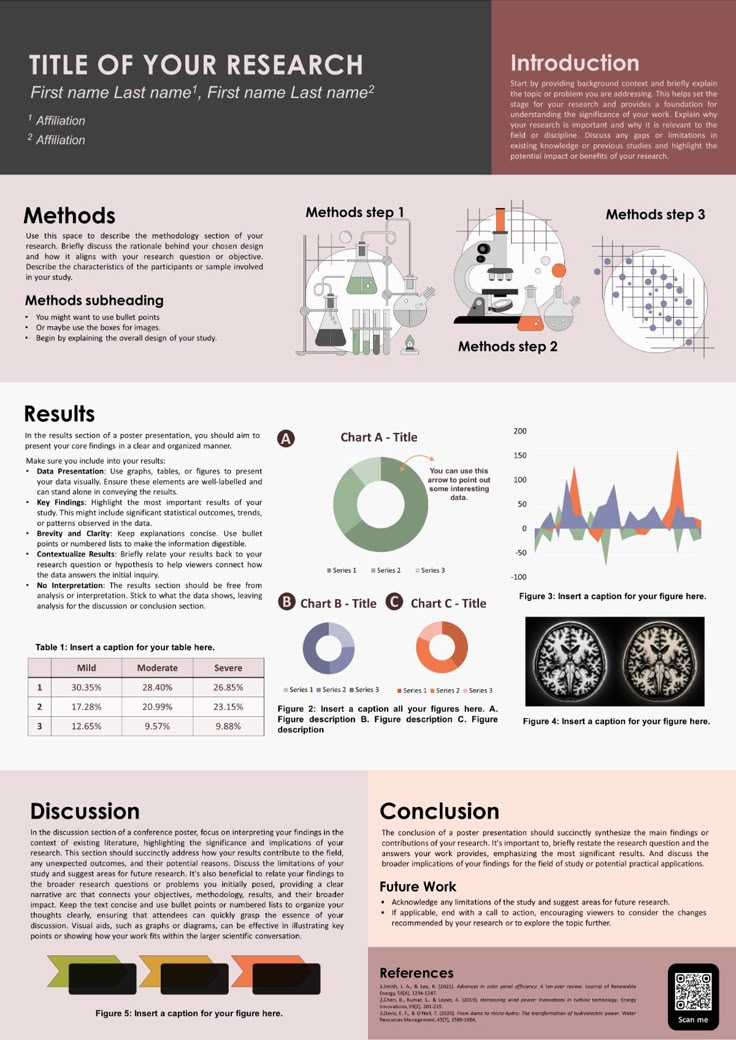


However, the format isn't one-size-fits-all. Depending on your specific discipline, the content, layout, and design might vary. But there are some universal sections that usually make an appearance:
Title and Author Information
The title should be concise, informative, and eye-catching. Usually, it appears at the top of the poster, in large, bold font, and is accompanied by the names of all authors and their affiliations.


Here's an example of how this section might look: Title: Investigating the Impact of Climate Change on Polar Bear Habitat Author 1: Jane Doe, University Name Author 2: John Smith, University Name"
Abstract
The abstract, typically placed below the title, provides a brief summary of your research. It should describe the purpose, methods, key results, and conclusions of your study. Writing a compelling abstract is crucial as it often determines whether viewers will spend more time on your poster.
Here's a sample abstract you might include:


"This study aims to understand the effects of climate change on polar bear habitats. Data was collected through satellite imagery and field surveys from 2010 to 2020. Our findings showed a significant reduction in habitable ice due to global warming, which could impact polar bear survival."
Crafting the Content
Once you've hooked your audience with your title and abstract, it's time to elaborate on your research. The main body of your poster should tell the story of your research, following a logical sequence.
A common structure is to divide the poster into these sections:

- Introduction
- Methods
- Results
- Discussion
- Conclusion
- Acknowledgments and References
Introduction
The introduction sets the stage for your research. It should provide enough context for viewers to understand the significance of your work. Include any relevant background information, state your research question or hypothesis, and explain why your study is important.
For instance:
"Polar bears are one of the most iconic arctic species, and their survival depends on stable sea ice for hunting and resting. However, climate change is leading to a rapid decline in sea ice, raising concerns about the future of polar bear populations."
Methods
Clearly describe the methods used in your research. Include details about data collection, analysis, and any statistical procedures. Remember, the goal is to give enough information for viewers to understand your approach without overwhelming them with too much detail.
A simple description of your methods might look like this:
"Satellite imagery was used to monitor sea ice extent and trends from 2010 to 2020. Field surveys, conducted annually during the spring, provided ground truthing for the satellite data."
Results
The results section presents the data and findings from your research. Use charts, graphs, and tables to visualize your data and make it more engaging. Highlight the key takeaways and trends, and ensure they align with your research question or hypothesis.
Here's an example of presenting results using a table:
| Year | Sea Ice Extent (million km²) |
|---|---|
| 2010 | 13.6 |
| 2020 | 8.1 |
"There has been a significant decrease in sea ice extent, with a loss of approximately 5.5 million km² over the ten-year period."
Discussion
The discussion section interprets your results and puts them in the broader context of your research question or existing literature. Explain what your findings mean, their implications, and any surprises or limitations of your study.
A potential discussion point could be:
"The reduction in sea ice extent could lead to increased human-bear conflict and reduced survival rates for polar bears. Further research is needed to fully understand the cascading effects of this sea ice loss."
Conclusion
The conclusion summarizes your findings and reiterates the significance of your research. It's also an opportunity to suggest future research directions based on your results.
For example:
"Our study highlights the urgent need for further research and conservation efforts to protect polar bear habitats in the face of climate change."
Acknowledgments and References
Lastly, acknowledge the individuals, institutions, and funding sources that made your research possible. Include a list of references to all the sources you've cited in your poster.
Here's how you might format these: Acknowledgments: We thank the Arctic Research Foundation, Jane E. Doe, and John R. Smith for their support. References:
1. CGIAR Research Program on Climate Change, Agriculture and Food Security. (2019). Climate change and polar bears. Nature Climate Change, 9(7), 462-468.
2. Pawlowski, J. (2020). Long-term trends in the Arctic sea ice extent. Polar Science, 20, 100729.
While these are the core elements of a research poster, the specific content and design will vary depending on your field and the story you want to tell. The important thing is to make your poster engaging, informative, and easy to understand, so it effectively communicates your research to your peers.
In the vast world of academic research, a well-crafted research poster can be a game-changer. It's a tool that can help you network, get feedback, and gain recognition for your work. So, don't wait - start crafting your story today!