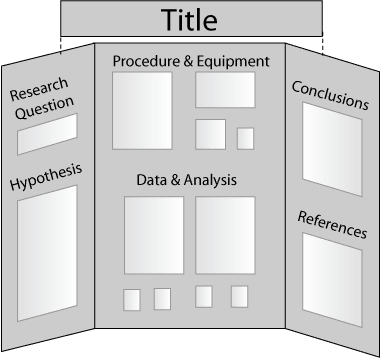
Tri-folds are an essential tool in science fair projects, serving as both an organizational structure and a visual aid to communicate complex data or ideas effectively. They allow students to present their findings in a clear, concise, and persuasive manner, ultimately helping them to impress judges and captivate audiences. This article explores various tri-fold examples from the science realm, discussing their strengths and offering practical tips for creating engaging and informative displays.
Science fairs are competitive events where students showcase their scientific knowledge, hypothesis, and findings. A well-designed tri-fold can significantly enhance a project's potential, helping students stand out in this competitive environment. Let's delve into some tri-fold display ideas inspired by scientific disciplines.
Environmental Science Tri-Folds
Environmental science projects often center around data analysis, comparisons, and predictions. A tri-fold can help students to articulate their methodology, results, and conclusions clearly.


Water Quality Analysis
A water quality analysis tri-fold might begin with an engaging issue, like a local river's pollution. The first panel could explain the testing process, employing simple flowcharts or diagrams. The second panel could present the data graphically, using bar charts or line graphs to compare pH, nitrate, phosphate, or other contaminant levels against accepted standards.
Carbon Footprint Calculator
To create an interactive element, a carbon footprint calculator tri-fold could include a fillable form in one panel, with results presented in the second. Students could research and present local emission equivalents (e.g., miles driven or gallons of gas consum) for different activities, helping to engage audiences in reducing their environmental impact.


Physical Science Tri-Folds
Physical science projects frequently involve chemical reactions, motion, or force and torque. A tri-fold can help to illustrate these concepts visually and reinforce learning.
Acid-Base Chemistry Experiment
For an acid-base chemistry project, the first panel of the tri-fold could feature a safe and engaging experiment, like a color-changing indicator (e.g., red cabbage juice). The second panel could exhibit results, displaying the effects of different acids and bases on the indicator using photographs or depictions of varying colors.
Newton's Laws of Motion
A physics tri-fold centered around Newton's laws of motion could explain each law clearly on a separate panel. The first panel could describe the first law, featuring an illustration of an object in motion or at rest. The second panel could delve into the second law, with visuals of forces applied and resulting accelerations using simple diagrams and calculations.


Life Science Tri-Folds
Life science projects may involve biological systems, cellular processes, or health-related topics. A tri-fold can effectively illustrate these concepts, showcasing growth or changes over time.
Plant Growth vs. Time
A plant growth tri-fold could present photographic evidence of a plant's growth, measured at regular intervals. The first panel could display the initial conditions, while the second panel could offer a graphical representation of key growth metrics (e.g., height, leaf count, or chlorophyll content) over time.
Микробное Грипп
A microbial influenza tri-fold could educate viewers on the virus, its lifecycle, and its effects. The first panel could offer an artistic depiction of the virus, complete with labeling for key structures. The second panel could present symptoms, diagnosis, and treatment options, using simple, easy-to-understand language.


Beyond these examples, the possibilities for engaging and informative tri-fold presentations are endless. By incorporating a mix of text, images, and interactive elements, students can create visually appealing and educational displays that impress audiences and enhance their understanding of scientific concepts. Embrace the power of the tri-fold – it's more than just a piece of paper; it's a tool for inspiration and learning!