A well-designed scientific poster is an incredibly powerful tool for academics and researchers to communicate complex ideas and data in a clear and engaging manner. In this guide, we'll walk you through the process of creating an effective scientific poster template that's both informative and visually appealing.
First, let's start with the basics. A scientific poster needs to be designed for a specific audience, usually researchers or fellow academics in your field. It should ideally fit within a standard poster board size, typically around 3 feet by 4 feet, and provide a quick, comprehensive overview of your research. Let's dive into the key elements and best practices for creating your scientific poster template.
Choose an Engaging Layout
The layout of your poster is key to guiding the viewer's eye and ensuring they understand your research narrative. A common and effective layout is the Z-pattern, which leads the viewer's gaze from the top left, down the left column, across the middle, and then up the right column, forming a 'Z'.

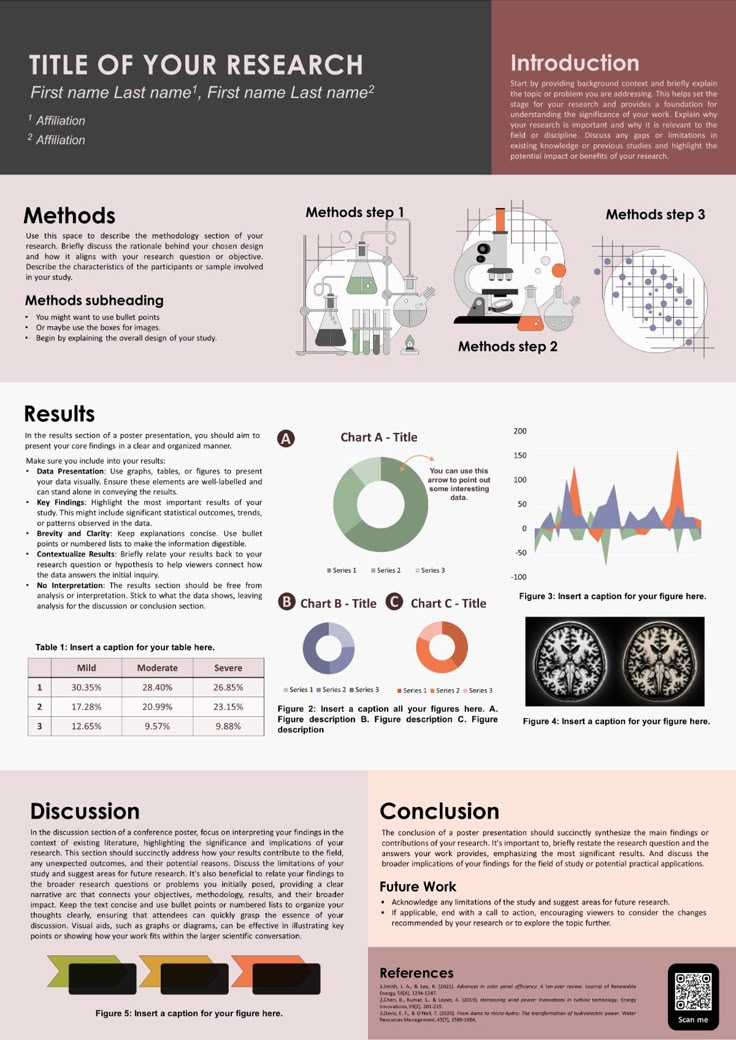

Another popular layout is the grid system. This divides your poster into even rows and columns, providing a structured and organized feel. Both layouts work well, so choose the one that best fits your content.
Select a Suitable Color Scheme and Fonts
Your color scheme and fonts should be professional and easy on the eye. Stick to a maximum of three colors to keep your poster uncluttered. Use darker shades for text and lighter shades for backgrounds to maintain contrast and readability.


For fonts, use a clean, sans-serif font for your headings, such as Arial or Roboto, and a simple, easy-to-read serif font for your main body text, like Times New Roman. Make sure to choose a font size that's easily readable from a distance, typically around 32-48 points for headings and 24-32 points for body text.
Incorporate High-Quality Visuals
Include relevant figures, graphs, and tables to illustrate your findings. Avoid using too many images; quality is more important than quantity. Ensure all visuals are high-resolution, clear, and directly related to your research.
Remember to label all figures and tables, using clear, concise captions to provide context and guide the viewer through your poster. Use number references in your text to link to figures and ensure a smooth reading flow.


Craft Clear and Concise Text Content
Your text should be informative, engaging, and easy to read. Use clear, academic language, but avoid jargon that might confuse viewers outside your immediate field. Stick to the '5 Ws and 1 H' (Who, What, When, Where, Why, and How) to structure your content.
Write short paragraphs and use bullet points or numbered lists to break up text and keep the reader's attention. Make sure to proofread for any typos or grammatical errors, and ask a colleague to review your text to ensure it's clear and engaging.
Design an Effective Title
Your title should be captivating and accurately reflect the content of your poster. Use an engaging, active voice to grab the viewer's attention. Make it large and bold to draw initial focus, and place it at the top of your poster.


Include your name, affiliation, and contact information in a smaller, footer-like section at the bottom of your poster. This encourages viewers to engage with you directly, either during the poster session or afterward.
Graduate Your Poster Design
The final touches can make all the difference. Add subtle shading or borders around sections to separate them, and use high-quality, relevant images or icons to generate interest and illustrate complex concepts.
Print your poster on high-quality, thick paper to ensure it looks professional and feels durable. If you're using an online poster platform, make sure your design works well when viewed on a screen and consider including a QR code for viewers to scan and learn more.
Congratulations, you've now created an engaging and informative scientific poster template! By following these best practices, you'll communicate your research effectively, leaving a lasting impression on your audience. Now, get out there and share your groundbreaking work!